
Asbestos Removal Patchway Gloucestershire (BS34) Area: In Britain, around five thousand people die each year from health issues caused by asbestos exposure, according to Health & Safety Executive (HSE) statistics. If your Patchway property or home needs the removal and disposal of some asbestos you will have to seek expert help so as to do this in a safe way. If you're carrying out construction work and suddenly encounter asbestos that you were not previously aware of, you must seek the advice of a certified asbestos specialist and also stop working in the affected area immediately. A decent asbestos removal contractor in Patchway will rapidly be able to evaluate the situation and recommend the correct technique for removal.
Some asbestos materials do not require a licensed asbestos contractor to handle the disposal. However, with the potential health and safety hazards to people who come in contact with it, it's generally advisable to bring in specialist help from the asbestos removal field. There are numerous regulations in the asbestos industry with which a specialist Patchway contractor must abide by in safely removing and disposing of any asbestos materials.
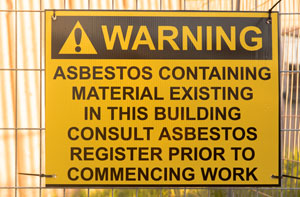
In addition to the removal of asbestos, there are many asbestos specialists in the Patchway area who also provide surveys, sampling and testing services to properly assess the situation before any work begins. This will help to identify exactly what type of material is present, its condition & whether it actually poses a risk. In some cases, asbestos-containing materials can be safely managed in place without the need for removal, provided they are not likely to be disturbed. Having a clear understanding of the risks that are involved allows property owners to make informed decisions and ensures that any necessary work is carried out in line with current regulations and best practice.
HEALTH DANGERS FROM ASBESTOS
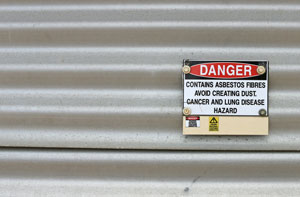
Asbestos when it's left undisturbed is not harmful to health. Only when it is cut or abraded can tiny asbestos particles be released into the air. When these particles enter the lungs through breathing, they can often cause a health condition called, asbestosis. It has been found that asbestos fibres or particles contribute to the development of lung cancer.
No cure is known for asbestosis, and the damage to the lungs caused by asbestos fibres is permanent.
The symptoms of asbestosis can include:
- Pain in the Shoulder or Chest
- Severe Shortness of Breath
- Wheezing
- Extreme Fatigue
- Persistent Cough
You should seek expert medical advice if you think you have been exposed to asbestos over a long period of time and you've developed symptoms from those mentioned.
CONSIDERATIONS WHEN DEALING WITH ASBESTOS
Asbestos was banned from being used in 1999 in the United Kingdom, although it was not very widely used from 1985 onwards. If your property or home was built in this time frame you need to be conscious of the possibilities of finding asbestos when carrying out remodelling work. It was used as an insulating material in walls, pipes and roofs, and was also an effective fire proofing product.
Finding asbestos in your Patchway home does not necessarily constitute an immediate danger. Remember that asbestos is usually only dangerous to health if damaged or disturbed. The fact is, in some structures it is best to leave the asbestos in place and use precautions to make certain it's not going to be damaged. You should get assistance from an experienced asbestos removal contractor if you are unclear about the risks posed by any asbestos materials in your home in Patchway.
Because asbestos-related illnesses often take many years to develop, exposure isn't always immediately obvious, which makes prevention all the more important. Even small amounts of airborne fibres can build up in the lungs over time, particularly with repeated disturbance of asbestos-containing materials. This is why strict control measures are in place across the UK, ensuring that any work involving asbestos is properly assessed & carried out using safe, regulated methods. Taking the right precautions early on can significantly reduce the risk to both occupants & tradespeople who are working on the property.
There are varying levels of risk relating to the wide range of asbestos materials that can be identified in older homes. Due to how different asbestos components are manufactured and their likelihood to release harmful fibres into the environment, products such as loose fill cavity insulations, asbestos insulation boards and pipe lagging are classed as a greater risk to health than roofing panels and asbestos cement sheets. No matter the risks associated with asbestos, an accredited asbestos removal company in Patchway can safely identify, remove and eliminate any harmful materials that are present in your property or home.

If the removal of asbestos has a requirement for a HSE approved contractor to complete the task, then the local authority or the Health & Safety Executive has to be notified. The Control of Asbestos Regulations 2012 are the guidelines that your chosen asbestos removal firm must comply with so as to safeguard people and work areas from asbestos dust and fibre.
If you do not hold a recognised HSE asbestos permit you may very well be prosecuted if you carry out any asbestos removal which needs a licensed individual to perform the task.
THE DISPOSAL OF ASBESTOS
Whenever the asbestos products have been stripped away from your Patchway property they have to be treated as hazardous waste. Any hazardous waste, particularly waste which contains asbestos, has stringent laws for the way in which it can be disposed of safely. A professional asbestos removal firm in Patchway will conform to all of the guidelines and regulations provided by the local authority and the Health & Safety Executive.
According to the condition of the asbestos material, i.e. if it is loose fibre asbestos or is damaged, its disposal will be subject to the Carriage of Dangerous Goods Act 2009 (CDG 2009). This requires a waste carrier's license to assure its safe disposal in a government endorsed disposal site. For your own peace of mind the hiring of a registered Patchway asbestos removal service gives them the obligation to follow all rules and guidelines, including the safe-keeping and storage of all work and disposal records for 3 years, at least in the event that it's required for reference afterwards.
STAGES OF WORK
Before removing any items that may contain asbestos from your Patchway home or property, it is wise to confirm the materials involved. Only a certified asbestos surveyor or company can legitimately indicate asbestos and the procedures needed for its removal and disposal. If you decide not to complete a professional examination on an older house, you must anticipate there is asbestos present somewhere and take all the precautions that are necessary.
A professional asbestos surveyor will carry out all analysis, inspections and sample-taking must be independent of the asbestos removal contractor.
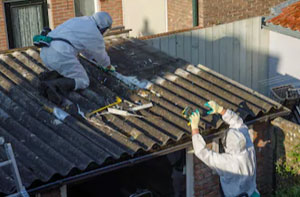
If the survey unearths asbestos that requires a certified specialist for removal and disposal, the HSE must be advised at least 14 days prior to the commencement of work. All legal documents and necessary paperwork will be provided by the asbestos removal specialist and will include: 1. A work declaration displaying the legal regulations that must be observed. 2. All relevant training certificates for employees along with all company certifications covering hazardous waste disposal, risk assessments, work licenses and any other paperwork that are legally required. 3. A statement showing how the samples of asbestos are going to be tested and the method for making sure the site is clear and safe once the dangerous materials have been removed. 4. After the 4 stages of clearances have been met, the Certificate of Reoccupation from the local authority will be supplied.
It is also worth noting that proper documentation and record keeping plays a key role throughout the entire process. From initial surveys & risk assessments through to final disposal, every stage should be clearly recorded and retained. This not only ensures compliance with current legislation but also provides reassurance that the work has been carried out safely & correctly. For property owners in Patchway, having this paperwork in place can be particularly important if you plan to sell, lease or carry out further development on the building in the future.
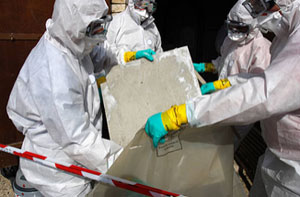
All appropriate health and safety precautions for the workforce, including personal protective equipment, will be supplied by the asbestos removal company and they will make certain that all dangerous asbestos waste is securely removed to a registered waste disposal facility.
QUALIFICATIONS, AFFILIATIONS and PROFESSIONAL ORGANISATIONS
Before you choose an asbestos removal firm in the Patchway area, check their membership of and affiliation with recognised bodies and associations within the asbestos field.
ARCA - The Asbestos Removal Contractors Association, represents professional individuals and companies working in the asbestos removal sector. By offering guidance, support and training to their members, ARCA is dedicated to promoting professionalism and safe working practices within the asbestos removal trade.
ATaC - Asbestos testing laboratories, surveyors and analysts will usually be affiliated with the Asbestos Testing and Consultancy Association (ATaC). As a UKAS accredited member, the Asbestos Testing Consultancy Association establishes its registered members as specialists within the asbestos testing sector.
UKATA - The United Kingdom Asbestos Training Association is a not for profit agency that's committed to improving standards throughout the asbestos industry, by offering the finest quality training and education. From large companies to homeowners, it provides instantly recognisable qualifications that can be checked and verified through their online portal.
Asbestos removal services and asbestos surveys are available to home and business owners in Patchway and additionally in nearby locations like Brentry, Olveston, Bradley Stoke, Yate, Hambrook, Pilning, Rudgeway, Almondsbury, Tockington, Winterbourne, Hallen, Frenchay, Cribbs Causeway, Little Stoke, Stoke Gifford, Easter Compton, Filton. Local Patchway asbestos removal specialists will probably have the dialling code 0117 and the postcode BS34. Verifying this should confirm you access locally based providers of asbestos removal. Patchway homeowners are able to benefit from these and many other related services.
Asbestos Garage Roof Removal Patchway
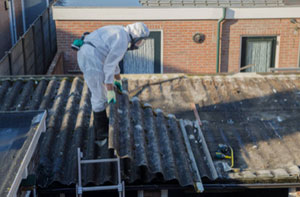
Asbestos garage roof removal involves safely disposing of old roofing materials that contain asbestos. Asbestos was widely used in roofing due to its durability and fire-resistant properties, but it is now known to pose serious health risks. Removing an asbestos roof requires special care and professional handling to stop the release of harmful fibres.
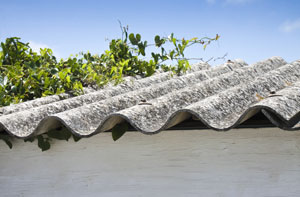
Engaging a licensed asbestos removal company is the first step in asbestos garage roof removal. These professionals have the training to safely dismantle and dispose of asbestos materials. To ensure their safety and avoid contamination, they will seal off the area and use protective gear.
The asbestos material is carefully packaged and transported to a certified disposal site once the roof is removed. The area will then be thoroughly cleaned by the removal team to ensure no asbestos fibres remain. Making sure compliance with health regulations, this process makes the garage is safe for future use. (Asbestos Garage Roof Removal Patchway)
Asbestos Encapsulation
It is not always necessary to physically remove asbestos containing materials when they're found inside a building in Patchway, in some situations it may be feasible to use a process called asbestos encapsulation as an alternative. With asbestos encapsulation, the asbestos containing materials are encased in a protective layer which may comprise of a painted or sprayed coating, a rigid sheet or a cloth wrap, to both stop the asbestos fibres from escaping into the atmosphere and safeguard the ACM from being compromised. A comprehensive asbestos risk assessment will need to be performed on the ACM's in order to check whether they can be encapsulated rather than removed. (Tags: Asbestos Surveys Patchway, Asbestos Risk Assessment Patchway, Asbestos Encapsulation Patchway)
Asbestos Surveys Patchway

Some kind of asbestos is often found in buildings that were put up in Patchway between the years 1850 and 1999. Widely used thanks to its chemical and heat resistant properties, it was for many years a commonplace building material. In the 70s and 80s it was discovered that asbestos causes a number of serious health problems, including lung cancer, pleural thickening, throat cancer, mesothelioma, asbestosis and esophageal cancer.
Both brown and blue asbestos was banned in the UK in 1985, and asbestos was banned entirely in 1999. Not surprisingly, a lot of structures that were built before 1999 still contain asbestos (thought to be approximately 50%), and many construction and demolition scenarios require that an asbestos survey is completed.
There are basically 2 different kinds of asbestos survey that can be done on buildings in Patchway.
- Asbestos Management Surveys
- Asbestos Refurbishment/Demolition Surveys
Asbestos Management Surveys Patchway: The intention of an Asbestos Management Survey in Patchway is to monitor asbestos containing materials (ACMs) during normal occupation and use of a property. Providing that ACMs are in good shape and are left undisturbed, they don't present much risk to a building's occupants. Minute asbestos fibres can be released into the environment, causing potential risk, when they're disturbed, damaged or in less than perfect condition. For any non-domestic buildings or shared parts of domestic buildings in Patchway which were built prior to 2000, these surveys are essential.
Asbestos Refurbishment/Demolition Surveys Patchway: The need for an Asbestos Refurbishment and Demolition Survey (ARD) occurs a building in Patchway is due to be refurbished or demolished. In most cases ARD surveys are conducted on Patchway buildings that are vacant or unoccupied, because a significant amount of structural damage can be caused during one of these surveys. Where refurbishment, upgrading or demolition is planned an ARD survey must be done before any of this work starts. This will identify any ACMs that exist within the building's structure and work out how to safely remove or manage such materials. Regardless of the scale of the renovations, any professionals, management agents and occupants involved are responsible for commissioning these ARD surveys, in accordance with the Control of Asbestos Regulations (2012).
Asbestos Removal Contractors Patchway
Asbestos removal companies are specialized contractors that are equipped to handle the safe removal and disposal of asbestos-containing materials (ACMs). The employment of licensed and trained professionals with the appropriate experience, know-how and protective equipment allows these companies to manage the risks associated with asbestos removal.
Regulatory bodies such as the HSE establish strict protocols and regulations that asbestos removal companies must follow to ensure the proper and safe removal of asbestos. Asbestos removal companies safely remove and dispose of asbestos materials by utilising specialist tools and techniques, which reduces the risk of exposure to harmful asbestos fibres. The hazards associated with asbestos are effectively managed by asbestos removal companies, thus playing a crucial role in protecting the environment and public health.
Asbestos Awareness Courses
If you're working in an industry where you might encounter asbestos, taking asbestos awareness courses is certainly worth your time. This is relevant for builders, electricians, decorators, and those involved in maintenance. These essential courses deliver a basic understanding of asbestos - what it is, where it can be found, and why it's considered hazardous. Asbestos was widely used right up until the late 1990s, so older buildings in Patchway may still have it. The first step in protecting yourself and your colleagues is learning how to detect materials that might contain asbestos.
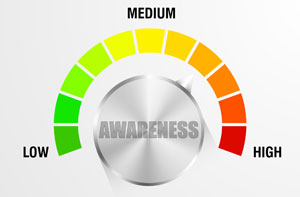
A major component of asbestos awareness training is recognising the risks that come with asbestos exposure. Ingesting asbestos fibres can cause significant health complications, such as asbestosis, lung cancer, and mesothelioma. Because these health issues can take a long time to show up, it's vital to be aware of the dangers today, since even a tiny bit of exposure can lead to serious long-term effects. Awareness programmes play a crucial role in helping people in Patchway get a clear understanding of these risks, allowing them to handle situations involving possible asbestos presence more effectively.
These courses aren't about removing asbestos � that's a job for the professionals. Instead, they teach you how to spot potential asbestos-containing materials, what actions to take when you think you've found asbestos, and the regulations around safely handling it. Knowing when to call in specialists helps you avoid disturbing asbestos and minimises health risks.
For those working in environments where there's a chance of encountering asbestos, investing in asbestos awareness training is a smart move for safety. By taking the time to understand and acknowledge the associated dangers, workers in Patchway can approach their roles with confidence, ensuring that they, their colleagues, and any occupants are safeguarded from this hidden risk. (Tags: Asbestos Awareness Courses)
Artex Removal
Way back in the 70s and 80s it was extremely common for tradespeople and DIY enthusiasts in Patchway, to apply a coating of Artex to their ceilings and walls. Artex was very effective for concealing imperfections, cracks and flaws in these surfaces, due to its strong, textured finish. In many situations the crazy sixties trend of polystyrene tiles (a renowned fire hazard), was replaced by an application of Artex.

The paradox is that these individuals were purely replacing one dangerous material for another, since Artex contained asbestos. The true perils of asbestos in building materials were not fully recognised at that time of course, and it wasn't banned in the United Kingdom until 1999. There are still a lot of houses in Patchway which have areas of Artex, and as long as this material is not disturbed in any way, it is moderately safe.
If you've got a home or office in Patchway that's got Artex on the ceilings or walls you mustn't try to remove it by yourself, although textured coating removal is classified as a non-licenced undertaking. To safely remove the Artex, you should contact a local asbestos removal service, who'll give you a price for both inspecting and correctly removing the problematic materials.
Asbestos Floor Tile Removal Patchway
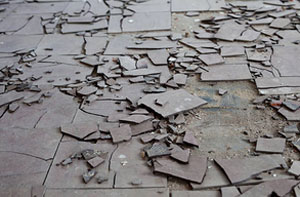
Asbestos floor tile removal is a hazardous and challenging process that calls for proper safety measures and careful handling. The heat-resistant qualities and durability of asbestos, a naturally occurring mineral, led to its common usage in flooring tiles in the past. When airborne asbestos fibres are inhaled, various health conditions such as asbestosis, mesothelioma and lung cancer have been linked to them.
To prevent exposure to the harmful asbestos fibres, removing asbestos floor tiles requires specialist equipment and protective clothing, such as gloves, respirators and disposable coveralls. Compliance with the guidelines established by regulatory bodies like the HSE is crucial for the safe removal and disposal of asbestos waste and floor tiles.
To decrease the danger of asbestos exposure, asbestos floor tile removal should be performed exclusively by trained professionals with the required experience and training. Consulting with an expert before taking any action to remove asbestos is recommended since the existence of asbestos in a building or home might not always be dangerous.
UK Occupations Most at Risk of Mesothelioma (Asbestosis)
(In No Particular Order)
- Metal Working Maintenance & Production Fitters
- Shipbuilders
- Construction Workers
- Demolition Workers
- Electricians
- Coach & Vehicle Body Builders
- Mechanical Engineers
- Carpenters & Joiners
- Mates to Electrical, Metal & Related Fitters
- Plumbers & Heating Engineers
- Electrical Energy, Boiler & Plant Operatives
(Source: HSE Study 2009)
 FAQ: Here are some of the most frequently asked questions about asbestos management and asbestos removal: What should I do if asbestos is damaged accidentally? Can asbestos be found in floor tiles or adhesives? Is asbestos classed as hazardous waste? When does asbestos need to be removed? What should I do if I suspect asbestos in my home? What is asbestos disposal? What is asbestos sampling? When was asbestos banned in the UK? What is a refurbishment and demolition asbestos survey?
Products Which May Contain Asbestos
- Composite Materials (Toilet Cisterns, Bath Panels and Window Sills)
- Textured Coatings (Older Forms of Artex and Polytex)
- Roofing Felt (Especially on Garages and Outbuildings)
- Textiles (Heat-Resistent Gloves, Protective Overalls and Fire Blankets)
- Gaskets and Rope Seals (Especially on Boilers)
- Asbestos Insulating Boards (AIB) (Partition Walls, Panels in Fireproof Doors and Ceiling Tiles
- Asbestos Cement Products (Cladding, Roofing Sheets and Downpipes)
- Lagging on Pipes
- Spray Coatings on Columns, Ceilings, Beams and Walls
- Floor Tiles (Frequently Used Between 1920 an 1960)
Asbestos Removal Tasks Patchway

Asbestos removal companies will be able to help with lead paint testing, Artex removal, artex asbestos survey, home asbestos survey, asbestos inspections in Patchway, environmental cleaning, asbestos van collection, asbestos abatement, site investigations, asbestos pipe lagging removal, garage asbestos removal Patchway, asbestos risk management in Patchway, asbestos management, industrial asbestos removal Patchway, household asbestos removal Patchway, asbestos replacement, Artex asbestos removal Patchway, house clearance, corrugated asbestos removal, asbestos cement water tank removal, asbestos air monitoring and clearance testing after removal work, asbestos risk assessments in Patchway, asbestos removal from loft insulation and roof void areas, fly tipping clearance, the removal of asbestos popcorn ceilings, asbestos encapsulation, and other hazardous waste related work. Listed are just some of the duties that are accomplished by people specialising in asbestos removal. Patchway specialists will keep you informed about their whole range of asbestos services.
More Help and Advice

Get information and facts about asbestos and its disposal from your local authority here. If you're curious to read up on the asbestos removal industry head here. If you'd like to read more about asbestos, you'll uncover information on the natural occurrence of asbestos, some countries where asbestos is still currently legal, the different types of asbestos & asbestos fibres, alternatives to asbestos in construction, the history of asbestos use, the manufacture of asbestos products, how asbestos is regulated internationally, the recycling and disposal of asbestos materials and the health problems caused by asbestos, by going to Wikipedia. If you're searching for a asbestos removal in Patchway and want somebody who's approved and qualified you could pay a visit to the Asbestos Removal Contractors Association website.
Training Courses for Asbestos Removal

ATaC provide several asbestos related courses, for anybody who wants to learn all about asbestos management, asbestos analysis, asbestos surveying and asbestos removal. The courses currently available include RSPH Level 4 Certificate in Asbestos Laboratory and Project Management, RSPH Level 3 Award in Asbestos Air Monitoring, RSPH Level 3 Award in Asbestos Bulk Analysis, RSPH Level 3 Award in Asbestos Surveying and RSPH Level 3 Award in Asbestos Management for Dutyholders. These qualifications are offered through the Royal Society for Public Health (RSPH), and have been specifically designed for industry experts involved in asbestos management, who are working within UKAS authorised businesses.
Asbestos Removal Near Patchway
Also find: Stoke Gifford asbestos removal, Easter Compton asbestos removal, Olveston asbestos removal, Winterbourne asbestos removal, Brentry asbestos removal, Pilning asbestos removal, Bradley Stoke asbestos removal, Hallen asbestos removal, Cribbs Causeway asbestos removal, Almondsbury asbestos removal, Yate asbestos removal, Frenchay asbestos removal, Little Stoke asbestos removal, Tockington asbestos removal, Rudgeway asbestos removal, Hambrook asbestos removal, Filton asbestos removal services and more. The majority of these villages and towns are served by companies who do asbestos removal. Patchway business and home owners can get price quotes by going here.
Asbestos Removal Services Patchway
- Asbestos Inspections
- Biohazard Removal
- Asbestos Testing
- Hazardous Material Removal
- Asbestos Removal Quotes
- Asbestos Removal Prices
- Asbestos Disposal
- Asbestos Removal
- Hazardous Waste Removal
- Waste Removal
- Industrial Asbestos Removal
- Residential Asbestos Removal
- Asbestos Removal Contractors
- Domestic Asbestos Removal

Other Patchway Trades: When you are looking for asbestos removal in Patchway, you might also need the professional services of other specialists, for instance you could need a stonemason in the Patchway area, a roofing specialist in your local area, a bricklayer in the vicinity, a joiner in the Patchway area, a building contractor in your locality, a painter & decorator in your locality, an electrician in Patchway, an odd job man in the area, demolition services in the immediate area, a plasterer in the vicinity, a dry lining specialist in the vicinity, garden clearance in the area, removal services in the immediate area, a cellar conversion specialist in Patchway, a cleaner in your locality, rubbish removal in your locality, SKIP HIRE in your locality, a flooring contractor in the local area, property maintenance in the Patchway area, damp proofing in your locality, landscaping in the immediate area, or some other Patchway tradespeople.
Asbestos Removal Patchway Asbestos Removal Near Me
 Asbestos Removal Companies Patchway
To obtain local info relating to Patchway, Gloucestershire go here
Asbestos Removal Jobs Patchway: View asbestos removal jobs near Patchway by clicking here: Patchway Asbestos Removal Jobs
Asbestos Removal in BS34 area, telephone code 0117.
TOP - Asbestos Removal Patchway
Asbestos Removal Near Me - Residential Asbestos Removal Patchway - Asbestos Encapsulation - Asbestos Removal Experts Patchway - Hazardous Waste Removal - Asbestos Removal Quotes - Commercial Asbestos Removal Patchway - Removing Asbestos - Asbestos Removal Patchway